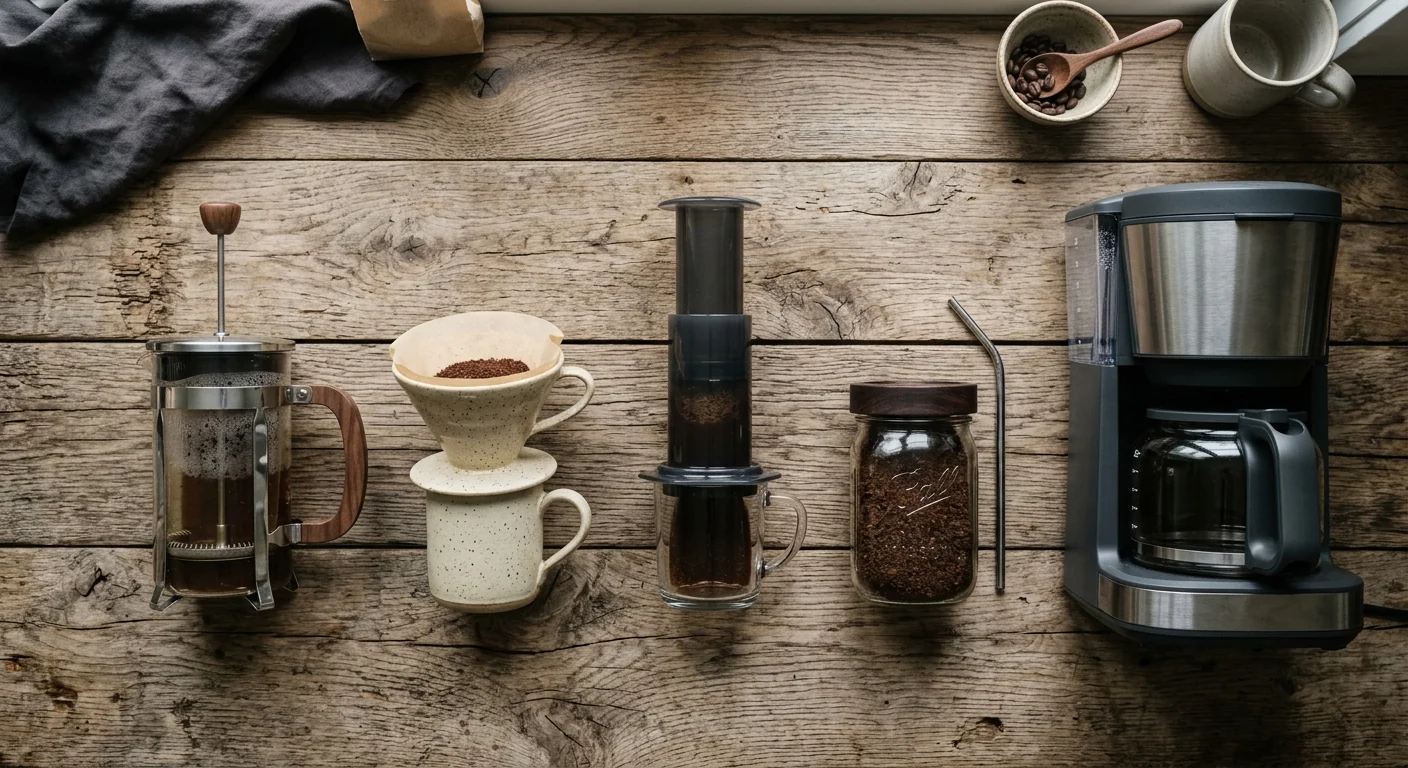
Everyone tells you what to buy. Nobody tells you which method is right for you.
That gap is what this guide closes. Whether you’re shopping for your first french press coffee maker or rethinking a drip machine that’s been disappointing you for years, the right answer depends on your lifestyle — not on what’s trending. Below you’ll find a decision framework, a full side-by-side comparison, and method-by-method breakdowns with real cost figures.
Find Your Brew Method
Answer these four questions to narrow the field before reading further:
| Question | Your answer → Best match |
|---|---|
| How many cups per morning? | 1–2 cups → AeroPress, Pour-Over, French Press · 4+ cups → Drip, French Press, Cold Brew |
| How much time do you have? | Under 5 min → AeroPress · 5–10 min → French Press, Pour-Over · Set-and-forget → Drip · Prep-ahead → Cold Brew |
| Flavor preference? | Bold & full-bodied → French Press, Cold Brew · Clean & bright → Pour-Over · Smooth & low-acid → Cold Brew · Versatile → AeroPress |
| Starting budget? | Under $30 → French Press or Cold Brew jar · $30–$60 → AeroPress or V60 · $60–$200 → Drip machine |
Keep your answers in mind as you read the sections below.
Master Comparison: 5 Methods Side by Side
| Method | Brew Time | Effort Level | Equipment Cost | Grind Type | Flavor Profile | Best For | Cleanup |
|---|---|---|---|---|---|---|---|
| French Press | 4–5 min | Low | $25–$50 | Coarse | Bold, full-bodied, oily | Beginners, multi-cup households | Medium (rinse mesh) |
| Pour-Over | 4–5 min | Medium–High | $20–$50 + grinder | Medium-fine | Clean, bright, nuanced | Enthusiasts, single-origin fans | Easy (toss filter) |
| AeroPress | 2–3 min | Low–Medium | $35–$40 | Medium (flexible) | Medium-bodied, clean | Travelers, beginners, experimenters | Very easy |
| Cold Brew | 12–24 hrs | Low (mostly waiting) | $0–$30 | Coarse | Smooth, low-acid, intense | Batch brewers, iced coffee lovers | Easy |
| Drip Machine | 5–10 min | Very Low | $50–$200 | Medium | Consistent, mild | Busy households, 4–12 cups/day | Easy |
French Press
A staple since the 1920s, the french press coffee maker is the most approachable entry point for anyone who wants real, unfiltered coffee without a steep learning curve.
How It Works
Coarsely ground coffee steeps in hot water (195–205 °F) for approximately 4 minutes. You press the metal mesh plunger down to separate the grounds, then pour immediately. According to His Word Coffee, the metal mesh allows natural oils and fine particles to pass into the cup, producing a heavy, full-bodied flavor that paper-filtered methods simply can’t replicate.
Setup Guide
- Heat water to 195–205 °F (just off the boil)
- Add coarsely ground coffee — coarse sea salt texture — at roughly 1:15 coffee-to-water ratio
- Pour water over grounds, stir gently, place the lid on (plunger up)
- Steep for 4 minutes, then press slowly and pour immediately
Pros: Rich flavor with natural oils intact · No paper filter cost · Easy to scale for multiple cups · Minimal technique required
Cons: Sediment in the cup · Risk of over-extracting lighter roasts (medium to dark roasts work best, per His Word Coffee) · Must pour immediately after pressing
Total Cost to Start: French Press
| Item | Estimated Cost |
|---|---|
| French press brewer | $25–$50 |
| Hand burr grinder | $40–$50 |
| Fresh-roasted beans (250g) | $12–$18 |
| Total | $77–$118 |
Best picks under $50: The Bodum Chambord and IKEA UPPHETTA are widely available entry-level options. Pair either with a hand burr grinder — the grinder matters more than the brewer. Medium to dark roasts shine here; avoid very light roasts, which can taste grassy without paper filtration.
Pour-Over
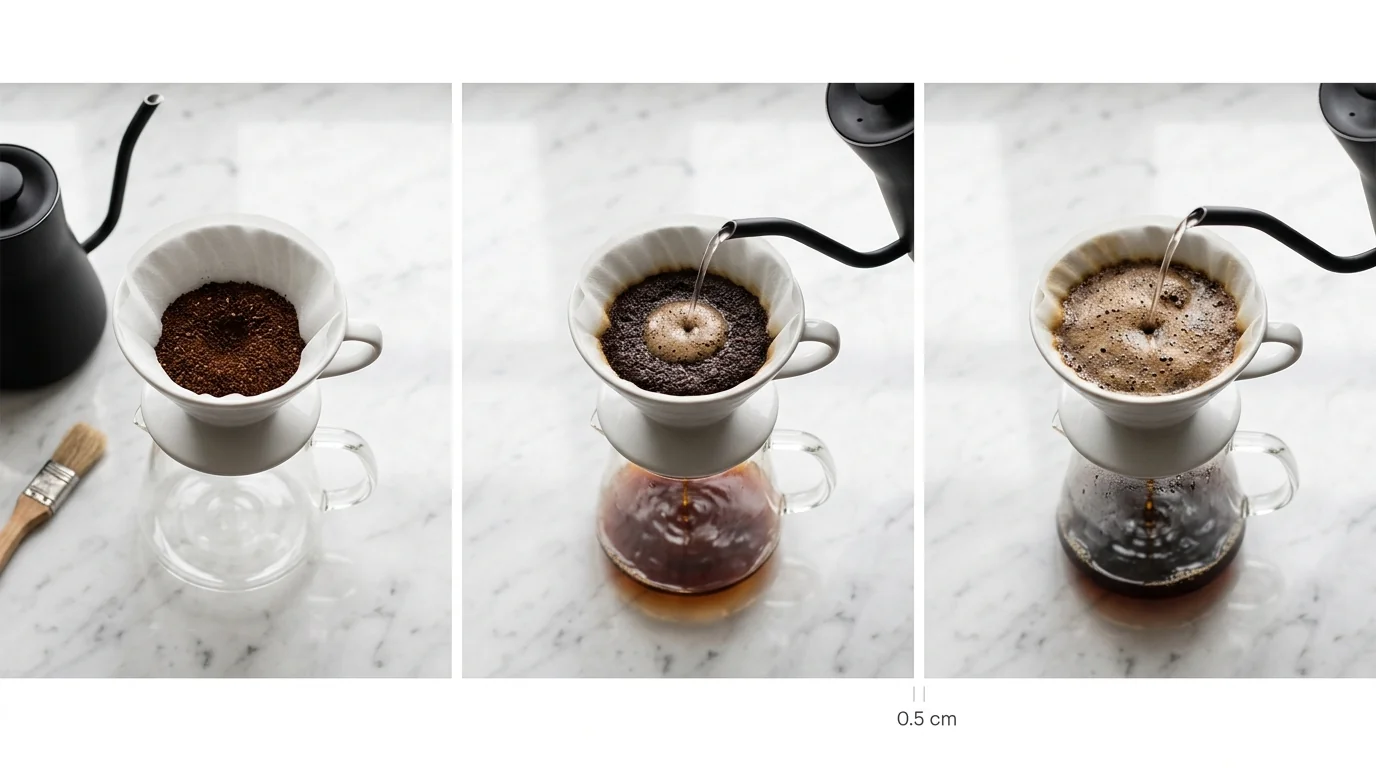
Pour-over coffee maker options — V60, Chemex, Kalita Wave — all share the same core principle: hot water passes through coffee grounds and a paper filter into a vessel below. The paper absorbs oils, producing a clean, bright cup that highlights the origin character of the bean.
According to His Word Coffee, a kitchen scale and gooseneck kettle are near-mandatory for consistent results. The learning curve is real, but the payoff is a level of clarity and nuance no other method matches.
V60 vs Chemex vs Kalita Wave
| Brewer | Price | Best For | Notes |
|---|---|---|---|
| Hario V60 | From ~$9 | Enthusiasts, portability | 2.94 oz, brews in under 5 min; conical shape rewards good technique |
| Chemex | $40–$50 | Crowd brewing, clarity | Filters ~30% thicker than drip; richer cup without sediment; up to 10-cup models |
| Kalita Wave | $25–$45 | Beginners | Flat-bed design creates longer dwell time and is more forgiving than the V60’s cone |
According to Home Grounds, the Kalita Wave’s flat-bed design means less margin for error compared to the V60’s conical shape — making it the better starting point if you’re new to pour-over. The Chemex, with its thicker filters, produces a cup closer to French press richness but without any sediment.
What Grinder Do You Need?
A medium-fine grind is the target. A burr grinder is non-negotiable here — blade grinders produce uneven particles that cause simultaneous bitter over-extraction and sour under-extraction, according to His Word Coffee. See our best coffee grinders guide for specific recommendations at every price point.
The SCA targets a brew ratio of 1:15–1:17 (by weight) and water at 90–96 °C (195–205 °F), with a total brew time of 3–5 minutes. Light to medium roasts are the pour-over’s natural territory — single-origin washed coffees reveal their full complexity through a paper filter. Dark roasts can taste flat or papery with this method.
AeroPress
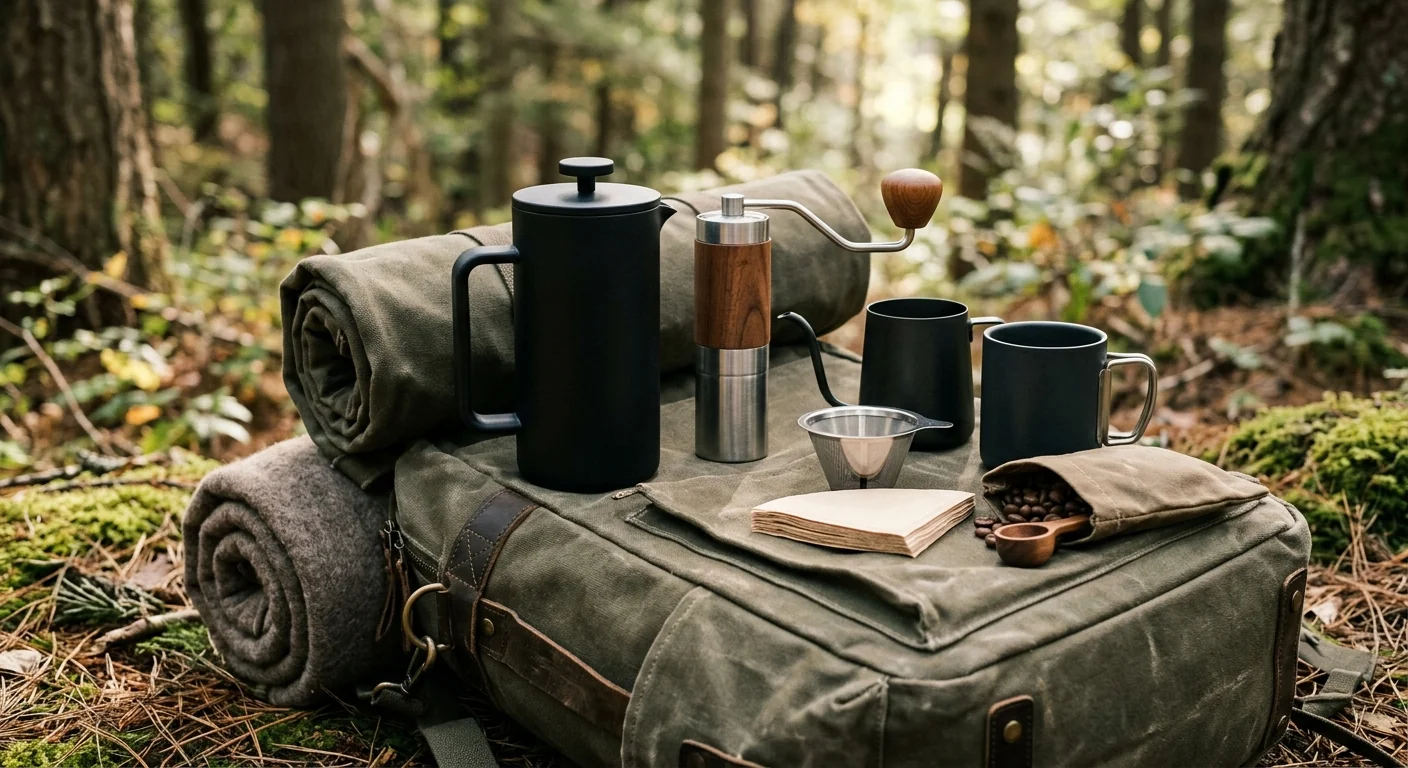
Invented in 2005 by Alan Adler, the AeroPress coffee maker is the most forgiving brewing device ever made. According to Paul John Caffeine, it uses air pressure to extract coffee in roughly 30 seconds to 1 minute of total brew time, with water temperatures ranging from 175 °F to 205 °F — a wider range than any other method.
According to His Word Coffee, grind imperfections can be compensated for by adjusting steep time, which is why the AeroPress is the best entry point for anyone who doesn’t yet own a good grinder. It produces a medium-bodied cup — cleaner than French press, with more body than typical pour-over — and can pull an espresso-style concentrate for milk drinks.
Why It’s the Best Travel Option
Near-indestructible, lightweight, and compatible with any hot water source including a hotel kettle — the AeroPress brews a full cup in under 3 minutes. The AeroPress itself costs $35–$40. Add a $40–$50 hand burr grinder (see our best coffee grinders guide for travel-friendly picks) and you have a complete setup for under $90.
Total Cost to Start: AeroPress
| Item | Estimated Cost |
|---|---|
| AeroPress | $35–$40 |
| Hand burr grinder | $40–$50 |
| Fresh-roasted beans (250g) | $12–$18 |
| Total | $87–$108 |
The AeroPress handles almost any roast level. Medium roasts are the sweet spot; for espresso-style concentrate, go darker and grind finer.
Cold Brew
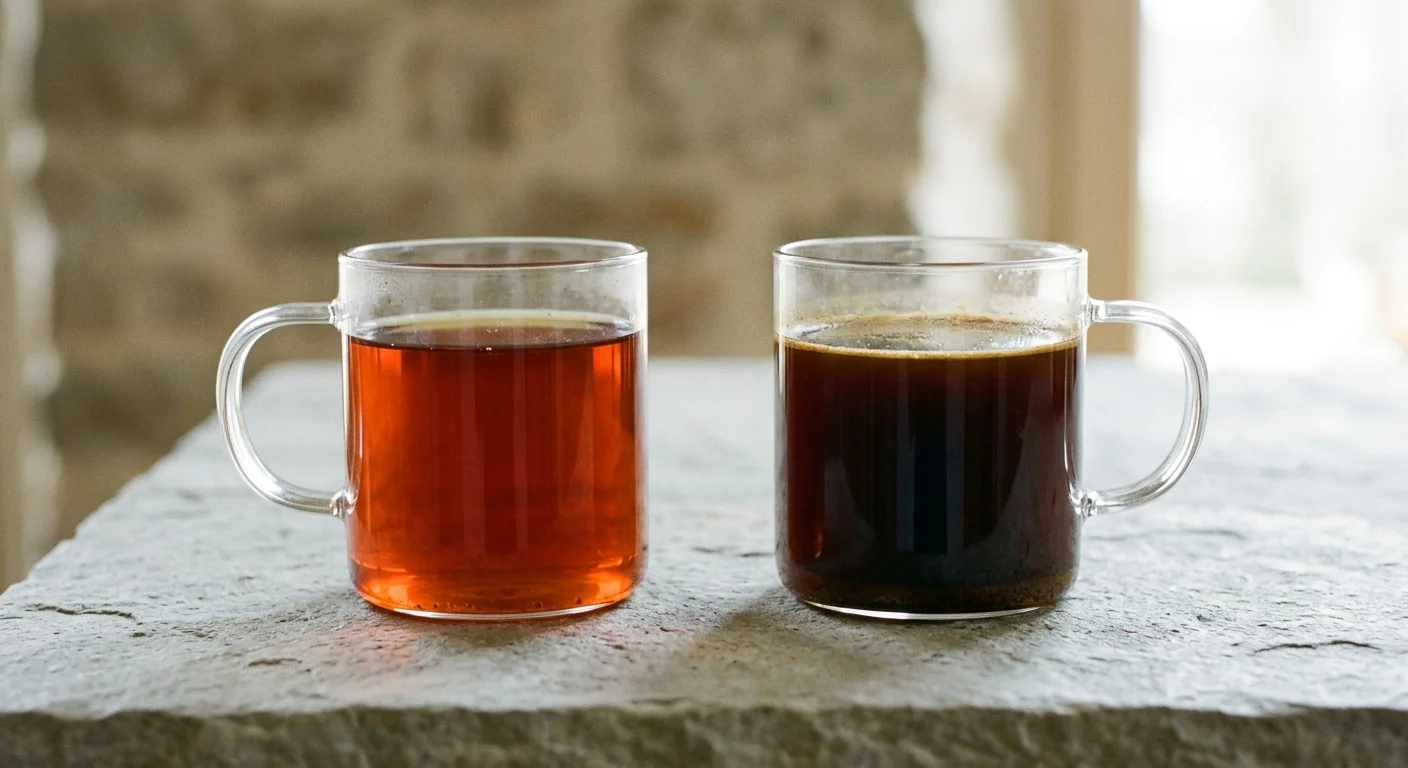
Cold brew is not iced coffee. Iced coffee is hot-brewed coffee poured over ice. Cold brew is coarsely ground coffee steeped in cold or room-temperature water for 12–24 hours, producing a smooth, heavy-bodied concentrate that is notably lower in acidity than any hot brewing method, according to His Word Coffee.
According to Home Grounds, the resulting brew is strong and intense without bitterness or acidity, and the full character of the coffee bean’s origin comes through clearly. Stored concentrate stays fresh in the refrigerator for up to 2 weeks — brew once, drink all week.
Time Investment and Cost Per Cup
Cold brew uses 2–3× more coffee per serving than hot brewing methods, which raises the per-cup cost. Here’s how the math works:
| Variable | Detail |
|---|---|
| Setup cost | $0 (mason jar) to $30 (dedicated cold brew maker) |
| Coffee used | ~100g per 500ml concentrate |
| Yield | ~8–10 servings per batch (diluted 1:1) |
| Cost per cup (specialty beans at $16/250g) | ~$0.64–$0.80 |
| Fridge life | Up to 2 weeks |
For a dedicated cold brew coffee maker, look for a fine-mesh filter and a wide-mouth jar. A coarse grind — thick sand texture, per Home Grounds — is essential to prevent over-extraction during the long steep. Medium to dark roasts produce the richest concentrate; light roasts can taste thin when diluted.
Total Cost to Start: Cold Brew
| Item | Estimated Cost |
|---|---|
| Cold brew maker or mason jar | $0–$30 |
| Hand burr grinder | $40–$50 |
| Fresh-roasted beans (250g) | $12–$18 |
| Total | $52–$98 |
Drip Coffee Machines
Drip automates pour-over: a machine heats water and passes it through grounds in a paper filter. According to His Word Coffee, the SCA-aligned water temperature target is 90–96 °C (195–205 °F) — but budget machines ($50) often reach only 80–85 °C, producing flat, sour coffee. Machines with a bloom or pre-infusion function perform noticeably better. Drip suits households brewing 4–12 cups daily and costs $50–$200 to start. For a full breakdown of which machines hit the SCA temperature target, see our best drip coffee makers guide.
| Item | Estimated Cost |
|---|---|
| Drip machine | $50–$200 |
| Beans + optional burr grinder | $52–$68 |
| Total | $102–$268 |
Coffee Pods and Instant Coffee: An Honest Take
Coffee pods solve one problem — speed — and create others. Pod coffee costs $0.70–$1.50 per cup versus $0.30–$0.80 for home-ground specialty coffee, and single-use pods carry a significant environmental footprint. The flavor ceiling is lower than any of the five methods above. Instant coffee has improved, but the gap between instant and freshly brewed remains wide. Both are reasonable emergency backups, not primary methods.
Best Coffee Beans for Home Brewing
According to His Word Coffee, fresh-roasted beans are the second most critical variable in cup quality after grinder type. Beans sitting in a grocery bin for months will taste flat regardless of brewing method. Buy whole beans with a roast date on the bag and use them within 2–4 weeks. Store in an airtight container away from light and heat.
| Method | Roast Level | Origin Style |
|---|---|---|
| French Press | Medium–Dark | Blends, naturals, Sumatra |
| Pour-Over | Light–Medium | Single-origin, washed process |
| AeroPress | Any | Flexible — experiment freely |
| Cold Brew | Medium–Dark | Brazilian, Colombian blends |
| Drip | Medium | Blends, consistent roasters |
For a broader look at home brewing equipment and beans, the home brewing hub is a useful starting point.
Frequently Asked Questions
Is pour-over worth the effort?
Yes — if you care about tasting what’s in the bag. Pour-over lets light-roast, single-origin coffees express floral notes, fruit acidity, and subtle sweetness that no other method reveals. The effort is real (scale, gooseneck kettle, pouring technique), but the quality gap over drip is significant. If you’re brewing medium-dark blends for a quick caffeine hit, the effort isn’t worth it. If you’re buying $18 bags of Ethiopian natural, it is.
What’s the cheapest way to start brewing good coffee at home?
A French press ($25) plus a $40–$50 hand burr grinder and fresh-roasted beans — total around $75–$85. According to His Word Coffee, blade grinders produce uneven particle sizes that cause simultaneous over-extraction and under-extraction, ruining the cup regardless of bean quality. Avoid them.
Do I need an espresso machine?
Not for any of the five methods above. The AeroPress produces an espresso-style concentrate suitable for milk drinks. For true espresso with crema, see our best espresso machines guide for what that investment involves.
Sources: His Word Coffee – Best Home Coffee Brewing Methods; Paul John Caffeine – French Press vs Pour-Over vs AeroPress; Home Grounds – 19 Coffee Brewing Methods